Loyal to the Union, But to No Avail

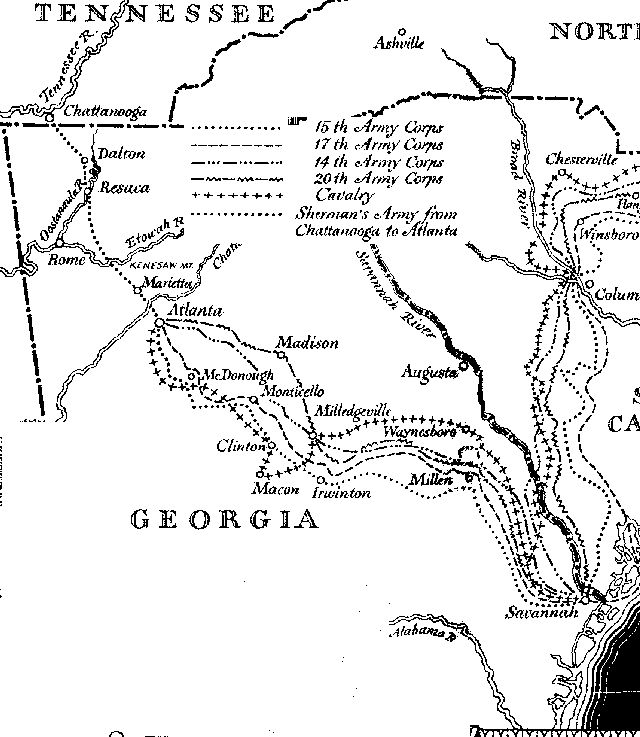
Abstract: The Southern Claims Commission was created by the United States House of Representatives in 1871 in order to aid those Southerners who had remained loyal to the Union during the Civil War. More than twenty-thousand Southerners made claims for compensation from the commission for all manner of loss...for material or crop losses, or perhaps for having livestock or horses commandeered for Union Army use in Sherman's March to the Sea. Over three-hundred Savannahians made claim to the Commission, including a Son of Savannah, Charles Neidlinger. For most claimants, the Southern Claims Commission was a bitter disappointment as two-thirds received nothing, and even those who did received only a fraction of their requests. Come find out more on a Sons of Savannah Walking Tour, and hear how the complicated history of the city touched real lives.
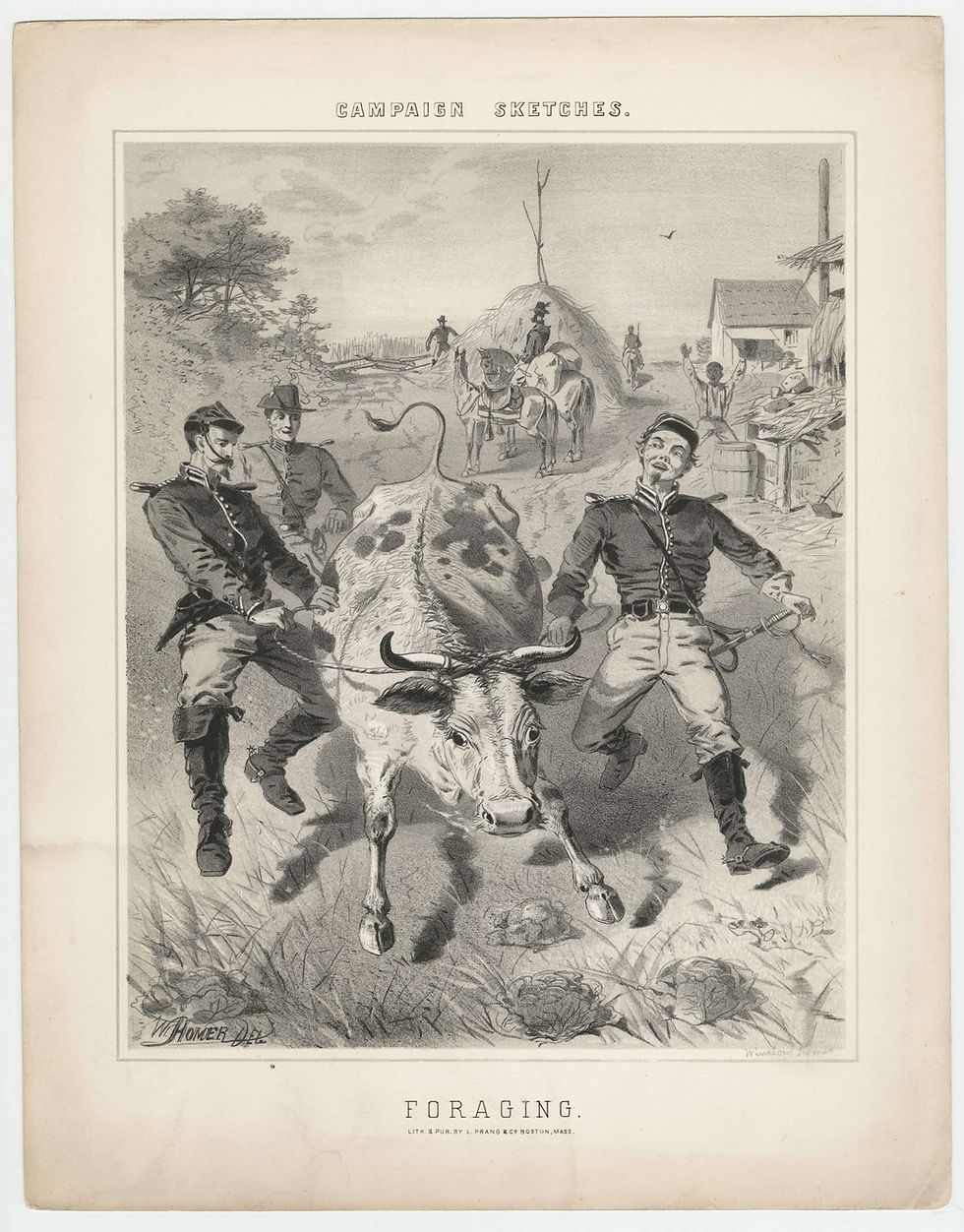
Many Savannahians remained loyal to the Union during the Civil War, and they sought to prove their cases after the war. Over three-hundred Chatham County citizens filed claims with the Southern Claims Commission, created by the United States House of Reprentatives in 1871. These men and women came from a variety of settings and backgrounds, but all made the case that they deserved relief from financial damage from federal action during the war.
A claimant had to prove active loyalty to the Union in order to receive reimbursement for losses suffered at the hands of the Union armies. This happened in depositions and often required the testimony of many witnesses. The cases before the Commission varied widely, and ranged from those worth a few hundred dollars, to some that what would amount to enormous sums. Each case had in common, however, the need for the claimant to be identified with the Union cause, and this often paid negative dividends socially and economically, no matter what happened with a claim.
One Chatham County applicant, William Coolidge, saw his Marshall House Hotel, which he managed during the war, become a field hospital for General Sherman's newly arrived army in December 1864. His claim sought reimbursement for $16,011.75 in lost furnishings, and like most of his fellow loyalists, his claim was denied. The commissioners found evidence that he was, in fact a supporter of the Confederate cause. Unlike most, however, his family fought for this denial for two generations, not giving up until just before the First World War.
Another unsuccessful applicant to the Southern Claims Commission from Savannah was David Dillon, whose claim was so outlandish that the Commissioners made an example of him by publishing a stand alone report of his case in its annual report to Congress in 1877, detailing that he not only did not make a case for loyalty, but by his own testimony, proved the opposite. His claim was one of the largest ever to come before the Commission, and it was denied after many years of effort.
The journey to this project was born out of my own family history. My 3rd great-grandfather, Charles Neidlinger, made his own claim for relief after the war. Living near Savannah, he claimed that Union forces had destroyed his crops and livestock. He asked for $1650.50 for lost cattle, among other items. He might have been the most Union man in all of Effingham County, but it did not help his cause his nephews and brothers were not, and had close ties to the Confederacy, including supplying its armies and bearing arms.
These discoveries and many others inspired me in my doctoral dissertation on the applicants from Chatham County to the Southern Claims Commission, from 1871-1880. What criteria determined the failure of applications to The Southern Claims Commission in Chatham County, Georgia, and what conclusions can be drawn from their experiences? For the historian these questions are very difficult to answer, because the written record is incomplete. But its not barren, and there are resources that give me hope to uncover the truth.
Looking back at the Civil War too often focuses on the political figures and military leaders, and far too little of that effort is given to discover the stories of those whose stories are not yet known. The Southern Claims Commission and its 22,000 applicants gives the historian, who takes the time to do it right, the opportunity to carefully discover what motivated them during a conflict that broke apart families and called into question ultimate loyalties.
In the months ahead it is this historian's desire to uncover and re-tell stories of Southern Claims Commission applicants from Chatham County, Georgia, and let the evidence take the reader where they need to go...to the truth of what happened, as best can be known, and to test the questions for what it meant to be loyal to the United States, while living in the heart of Dixie.
John S. Breckenridge, Sr.
Picture: https://encyclopediavirginia.org
Mills, Gary B.. (1994). Southern Loyalists in the Civil War. Clearfield
GHS 1001, Coolidge family papers, 1873-1913. Georgia Historical Society, Savannah, Georgia.
U.S. Congress. House of Representatives. Annual report of the Commissioners of Claims. Sixth annual report of the Commissioners of Claims, with accompanying documents. Dec. 5, 1876. -- Referred to the Committee on War Claims and ordered to be printed. 44th Cong., 2nd sess., 1876. 44-4.
U.S. Congress. House of Representatives. Seventh general report of the Commissioners of Claims. December 6, 1877. -- Referred to the Committee on War Claims and ordered to be printed. 45th Cong., 2nd sess., 1878. 45-4.

Comments